Generally, plastic bags are considered insoluble in water, but there are also "water-soluble plastic bags"—a type of green plastic bag usually called "PVAL". The chemical name of PVAL is polyvinyl alcohol (PVA), and its molecule contains a large number of hydrophilic hydroxyl groups, so it can dissolve in water. Since PVA plastic was invented in the 1920s, it has a history of 80 years of production and application. With the rapid development of the petrochemical industry, the global output of PVA plastic has been increasing day by day. China started producing PVA plastic relatively late, and its application fields are relatively narrow, mainly in construction, coatings, adhesives, textiles, and yarn sizing, with limited usage. Although it is also the main raw material for producing vinylon, the original "dacron" fabric is no longer popular. Its application methods are also relatively single, almost all using its aqueous solution. Up to now, China's annual production capacity of PVA plastic has exceeded 500,000 tons. Traditional application fields are gradually being eliminated, so developing new application areas for PVA plastic has become the focus of attention. To open up new application fields, new processing methods must be studied. 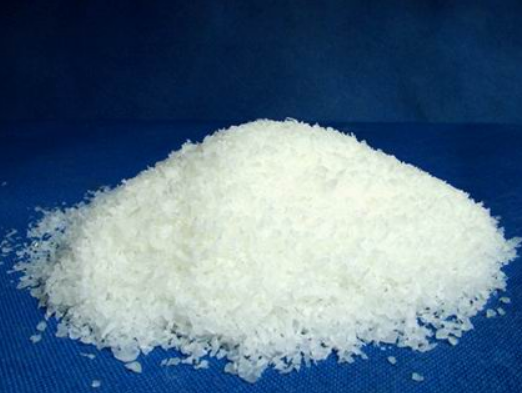 Nowadays, the global call for plastic ban has been put forward, and all countries attach great importance to the problem of white pollution, which is caused by plastic bags that are non-degradable for 300 years polluting our planet. Now environmental experts have proposed that degradable plastic bags can replace traditional non-degradable ones, so PVA has regained new application fields and values. Therefore, water-soluble degradable plastic bags have appeared on the market. PVA plastic has good biodegradability, and starch has even better biodegradability, so their blend has become an excellent raw material for degradable plastics. However, both PVA plastic and starch have common shortcomings, such as high brittleness, poor thermal stability, and difficulty in molding. When used in ultra-thin products, the particle size of starch directly affects its moldability. When used in thick products, due to the flexible molecular chain structure of both PVA plastic and starch, their strength is poor. But these problems have now been completely solved by scientists, and China currently has an annual production scale of 500,000 tons. Therefore, the films used to make plastic bags now all use the blend of PLA + PBAT as the raw material for blow molding. Because the bags made from the film blown by PLA + PBAT have good toughness, reliable sealing, and excellent moldability, which can meet the packaging needs of our daily production and life.
Article Title: Water-Soluble Degradable Plastic Bags – Polyvinyl Alcohol (PVA) URL: https://en.szxylp.com/news/company-news/water-soluble-degradable-plastic-bags-polyvinyl-alcohol-pva.html