Plastics play a vital role in modern agricultural production but also pose severe environmental challenges. When plastic waste leaks into natural environments like soil and water bodies and fails to degrade, it causes multiple environmental hazards, including visual pollution, soil degradation, and microplastic pollution. As a major producer and consumer of plastics, China faces significant pollution of soil, marine, freshwater, and air systems due to the untimely recycling and treatment of plastic waste. In response to this dilemma, eco-friendly mulch films offer a new path toward a solution.
The Multiple Hazards Of Microplastics To Agricultural Ecosystems
Soil Health Degradation: China uses a massive amount of agricultural film, with nearly 300 million mu of land covered annually, consuming about 1.45 million tons of plastic mulch film—approximately 75% of global usage. These films typically have a service life of only 1-2 years, but the discarded polyethylene fragments take 300-400 years to fully degrade in the soil. Annually, 200,000 to 300,000 tons of non-degradable residual film are left in farmland. High concentrations of microplastics significantly affect soil organic nitrogen, soluble organic carbon, and organic phosphorus content, while damaging soil structure integrity and altering soil aggregates, particle size distribution, and porosity.
Crop Growth Inhibition: Microplastic pollution leads to soil compaction, reduced aeration, and diminished water retention capacity, directly impairing crops' absorption of water and nutrients. This inhibits growth and development, resulting in yield reduction and land degradation. If waste mulch film is not effectively recycled, the "White Revolution" that once boosted agricultural productivity could turn into a "white pollution" crisis threatening sustainable agriculture.
Climate Change Acceleration: Improper disposal of plastic waste also affects greenhouse gas emissions. Studies show that soil CO₂ emissions increase significantly under polyethylene microplastic pollution, causing lasting harm to fragile ecosystems.
Marine Ecological Threats: Microplastics pose serious risks to aquatic ecosystems. Research indicates that benthic organisms like oysters experience changes in diversity and abundance after repeated exposure to high microplastic concentrations; microplastics can remain in herbivorous crabs for up to 14 days, causing intestinal damage; they also impair algal photosynthesis and respiration rates. More critically, microplastics can enter the human body through the food chain, posing potential health risks.
Eco-Friendly Mulch Films: A Sustainable Alternative For Agriculture
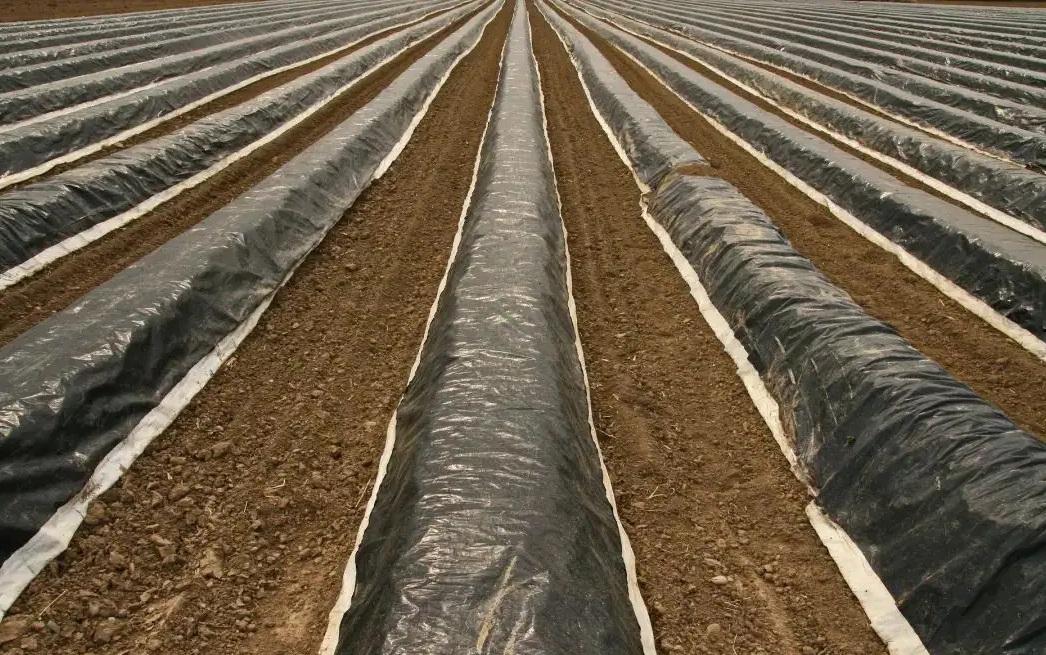
In response to the environmental issues caused by traditional mulch films, eco-friendly mulch films offer a key solution. Qualified mulch films should meet the thickness standard of 0.01 mm or above, with 0.015 mm or thicker high-strength films recommended to improve recycling efficiency at the source.
Fully Biodegradable Mulch Films represent an innovative solution. Unlike traditional polyethylene films, fully biodegradable mulch films decompose under natural conditions after use, significantly reducing residues. When selecting products, ensure they are clearly labeled "Fully Biodegradable Film—Note Usage Conditions," and pay attention to the recommended usage duration indicated on the label.
Scientific Use And Management: Integrating agronomy, agricultural machinery, and farming techniques can promote reduced-film cultivation technologies. Based on crop growth characteristics and planting needs, opt for films with moderate thickness, high toughness, and strong anti-aging properties. Promote multi-use techniques for single films and adopt diversified agronomic practices such as sowing beside the film, semi-mulch coverage, and film-free shallow drip irrigation to reduce mulch film usage at the source.
Integrated Management And Recycling Models
Effective management of agricultural film pollution requires comprehensive strategies. Fengzhen City’s case demonstrates that establishing a "enterprise recycling, farmer participation, government supervision, market promotion" system for residual film recycling can significantly improve recovery rates. Through policies like "old-for-new" exchanges (7 jin of waste film for 1 jin of 0.15 mm thickened film) and incentive-based subsidies for recycling enterprises, the city achieved a film recovery rate of 88.2%.
Legal And Regulatory Support: The "Agricultural Film Management Measures" explicitly prohibit the production, sale, and use of agricultural films that are banned by the state or fail to meet mandatory national standards. Those who fail to recycle agricultural film as required face corresponding penalties, providing legal assurance for the promotion and use of eco-friendly mulch films.
In summary, while microplastic pollution poses a serious threat to agricultural ecosystems, promoting eco-friendly mulch films, establishing scientific recycling systems, and improving regulations can effectively address this challenge and achieve sustainable agricultural production. Strengthening the research, development, and application of eco-friendly mulch films is a critical measure for controlling farmland microplastic pollution and protecting agricultural ecological environments.
Article Title: The Microplastic Crisis in Agricultural Non-Point Source Pollution and Eco-Friendly Mulch Film Solutions URL: https://en.szxylp.com/news/industry-news/the-microplastic-crisis-in-agricultural-non-point-source-pollution-and-eco-friendly-mulch-film-solutions.html