Paper straws replacing plastic straws, eco-friendly tableware replacing conventional plastic tableware, biodegradable plastic bags replacing disposable plastic bags... Since January this year, the updated "Plastic Restriction Order" has officially taken effect, putting a stop to the production, sale, and use of many disposable plastic products.
Despite China's growing emphasis on restricting the use and promoting the recycling of plastic products, a large amount of plastic is still directly released into the environment. "These exposed plastic products form microplastics under the influence of physical processes, photodegradation, and other factors, eventually entering the ecological circle and food chain, posing potential impacts on the entire ecosystem," said Wu Bian, a researcher at the Institute of Microbiology, Chinese Academy of Sciences (IMCAS), in an interview with China Science Daily.
Against this backdrop, Wu Bian's team, in collaboration with domestic and international partners, has achieved the complete degradation of high-concentration polyethylene terephthalate (PET) microplastics under mild conditions based on computer-aided protein design. This provides a new idea for the pretreatment of microplastics in wastewater. The relevant results were recently published as a cover article in Catalysis.
From "White Pollution" to "Invisible Killer"
"Due to the inherent requirements for hardness, strength, durability, and stability, discarded plastic products cannot degrade automatically and cause harm to the environment," said Cui Yinglu, co-first author of the paper and assistant researcher at IMCAS, to China Science Daily. Compared with recyclable plastics, the threat posed by invisible microplastics is more severe and urgent.
In 2004, Rid C. Thompson from the University of Plymouth in the UK and his colleagues first proposed the concept of "microplastics." Over the past decade, numerous studies at home and abroad have found that microplastics can be absorbed by crops, marine and terrestrial animals such as fish, earthworms, chickens, and bees, as well as humans, affecting their growth, development, and reproductive capabilities.
In this context, in January 2020, China issued the Opinions on Further Strengthening the Governance of Plastic Pollution, which proposed phased targets for strengthening plastic pollution control in three time periods: 2020, 2022, and 2025. It also formulated specific requirements for prohibiting, restricting the production or use of various plastic products.
However, public data shows that in 2019, China's cumulative output of plastic products reached 81.84 million tons, and the output of plastic films reached 15.9462 million tons. In contrast, the consumption of biodegradable plastics was only 520,000 tons. With the gradual implementation of the Plastic Restriction Order, the development of green biodegradation strategies has become an urgent need.
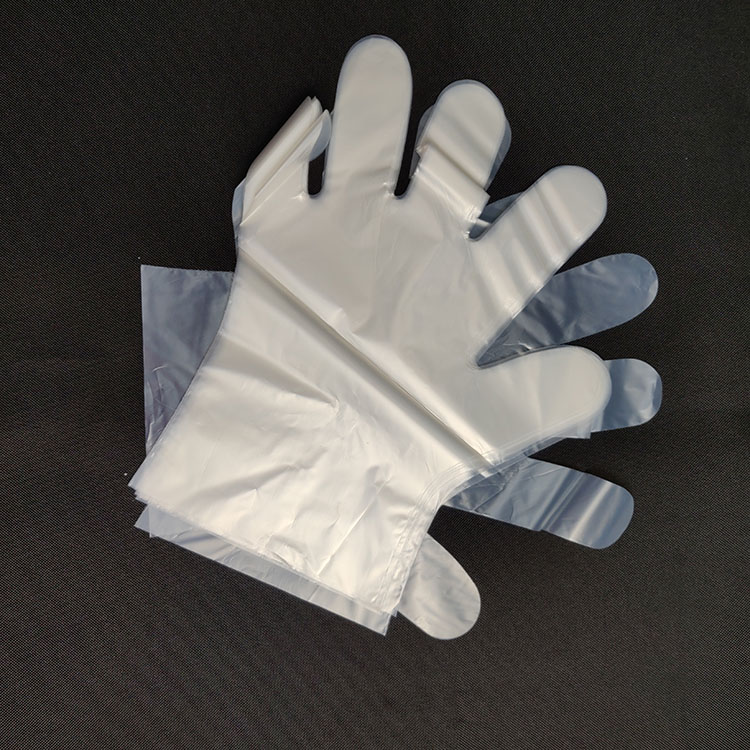
Fully Biodegradable and Compostable Gloves
Creating a "Nemesis" for the "Killer"
"Can microplastics be degraded on-site without the need for recycling?" Wu Bian, who has long been engaged in artificially designed enzyme proteins, hopes to provide a "greener" solution through artificial intelligence (AI).
Currently, research on the in-situ degradation of microplastics under mild conditions is an emerging field. It involves using native or inoculated microorganisms to degrade or metabolize microplastics, converting them into harmless end products. Adding catalysts during this process can enhance biodegradation. "Biocatalysis itself is inherently green, and ideal biological enzymes can double the efficiency of microplastic degradation," Wu Bian said.
In 2016, Kohei Oda's team from Kyoto Institute of Technology in Japan reported the first IsPETase degrading enzyme that can effectively degrade low-crystallinity PET plastics (which take hundreds of years to degrade naturally) at 30°C. However, this enzyme has extremely poor stability and cannot meet the practical application requirements of biodegradation.
Against this background, Wu Bian's team collaborated with researchers from Xiang Hua's team at IMCAS, Tianjin Institute of Industrial Biotechnology, University of Science and Technology of China, Nanjing University, and the University of California, USA, to explore whether microplastics can be degraded on-site through in-situ treatment. They proposed a novel computational design strategy for protein stability (GRAPE), which modifies the stability of IsPETase based on computer-aided protein design, resulting in a redesigned enzyme (DuraPETase) with significantly enhanced adaptability.
Due to IsPETase's potential in converting PET into carbon and energy, many research teams around the world have modified it since its discovery in 2016. "To my knowledge, DuraPETase is the best PETase mutant developed to date," commented a reviewer.
The newly designed enzyme protein is far more capable of "digesting" plastic than substances found in nature. Under mild conditions, the degradation efficiency of DuraPETase for PET films with 30% crystallinity is 300 times higher than that of the wild-type enzyme. Scanning electron microscopy observations show that the internal structure of PET films treated with DuraPETase undergoes significant corrosive changes—achieving the complete degradation of high-concentration microplastics (2 g/L) under mild conditions.
"Mild conditions refer to the optimal temperature of 37°C for engineered microorganisms. Under this condition, we expect to degrade microplastics through microbial technology in the future, providing a new idea for the pretreatment of microplastics in wastewater," Wu Bian said.
AI Empowerment for Higher Efficiency
Enzyme proteins can be described as the "chips" of modern biocatalytic reactions. With ideal biological enzymes as "catalysts," biocatalysis can achieve twice the result with half the effort. The birth of DuraPETase is another breakthrough in the practical application of AI-designed proteins.
"Currently, the main bottleneck in the computational modification of enzyme stability is the inability to solve the global stacking problem of beneficial mutations," Wu Bian said. In the past, obtaining high-performance enzymes through protein evolution was a lengthy process. The new study combines rational protein design and AI algorithms to systematically cluster and analyze computationally obtained beneficial mutants, and then uses a greedy algorithm for network iterative stacking. This significantly avoids negative synergistic interactions and maximizes the exploration of stacking paths in a short period of time.
"This is like in a team where excellent talents perform their respective duties, but we are not sure which people can achieve the best results when working together. The GRAPE strategy is to solve this problem: it classifies talents, iteratively forms different small groups, and quickly identifies the most suitable people to work together," Cui Yinglu explained.
In this regard, reviewers believe that this has greatly improved the stability and efficiency of PET degrading enzymes under high-temperature conditions. Further research shows that this enzyme also has significantly improved performance at ambient temperatures and can degrade other polyester plastic substrates such as PBT and PEN.
Article Title: New Study Achieves Complete Degradation of High-Concentration Microplastics at 37°C URL: https://en.szxylp.com/news/industry-news/new-study-achieves-complete-degradation-of-high-concentration-microplastics-at-37-c.html